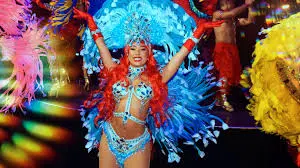
Carnival dancers, most famously known as samba dancers or passistas, are performers in public celebrations like the Rio Carnival who are known for their energetic, flashy, and rhythmic dancing, often in elaborate costumes. They are a key part of the parades, which feature intricate floats, dazzling costumes, and a strong sense of community and celebration. Other carnival dancers may exist in other locations and traditions around the world, such as Caribbean carnival dancers who also use elaborate costumes and express freedom and cultural pride.
Key characteristics and roles
- Energetic and joyful: The dancing is typically upbeat, joyful, and designed to be a happy, party-like experience for spectators and participants alike.
- Elaborate costumes: Dancers are adorned in large, flashy, and sometimes revealing costumes with feathers, beads, and other ornamentation that express individuality while also contributing to the overall spectacle of the parade.
- Samba dancers ($passistas): These are professional or highly skilled dancers within a samba school who are central to the parade's performance. They are often a highlight of the parade and are known for their skill, grace, and rhythmic control.
- Destaques (Samba Queens): These are prominent, often celebrity, samba dancers who lead parades and symbolize feminine strength and control, exuding confidence and style.
- Community and social expression: The act of dancing and celebrating in costumes, even for the dancers, can be a way to set aside everyday individuality to experience a heightened sense of social unity and freedom.
- Diverse global presence: While most famously associated with Brazil, carnival dancing and dancers are found in many parts of the world, each with its own unique traditions and history, like the Caribbean and other countries in Latin America.