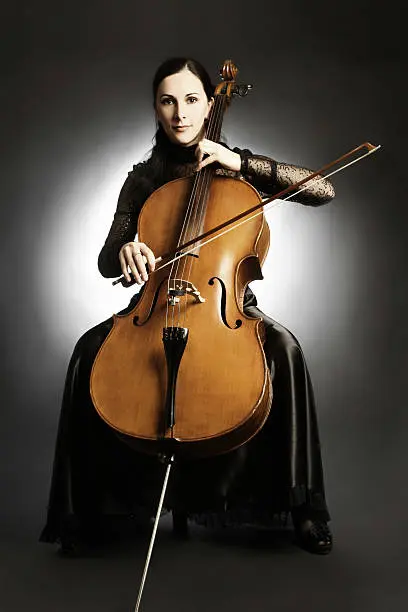
A cello player, or cellist, is a skilled musician who plays the violoncello, a bowed string instrument known for its rich, deep, and expressive tone, which closely resembles the human voice.
Role and Responsibilities
Cellists perform in a variety of settings, each with specific duties:
- Orchestral Musicians: They are essential members of a standard symphony orchestra (typically 8-12 cellists), providing harmonic depth, rhythmic stability, and occasionally carrying melodic lines. A principal cellist leads the section, determines the bowing styles, plays solos, and ensures the cohesion and good ensemble of the group.
- Chamber Musicians: Cellists are core members of small ensembles like string quartets, trios, and quintets, where they often provide the bass line or engage in intricate musical dialogues with other instruments.
- Soloists: Highly proficient cellists perform concertos and sonatas as featured soloists, showcasing technical mastery and artistic expression, often accompanied by an orchestra or piano.
- Diverse Genres: The cello's versatility allows it to be used in various non-classical genres, including jazz, rock, pop, folk, and film scores, where cellists adapt their playing style to the specific needs of the music.
- Recording/Teaching: Many cellists also work as recording session musicians or as private instructors/school teachers, planning lessons and guiding students.
Skills and Techniques
Professional cellists possess a blend of technical proficiency and artistic sensibilities:
- Technical Proficiency: They must master a range of playing techniques, including bowing styles like legato (smoothly connected notes), staccato (short, detached notes), spiccato (bouncing the bow), and pizzicato (plucking the strings).
- Musical Interpretation: Cellists bring musical compositions to life through their interpretation, employing dynamics, articulation, and vibrato (a left-hand rocking technique for expression) to add warmth and emotional depth to the music.
- Practice and Discipline: A significant amount of time is dedicated to rigorous individual practice and rehearsals to maintain and improve technical skills, learn complex repertoire, and ensure precise intonation and rhythm.
- Collaboration: Effective communication and a collaborative spirit are essential for working with conductors, composers, and fellow musicians in an ensemble setting.
- Music Theory Knowledge: A strong understanding of music theory and the ability to read complex musical scores, often written in bass, tenor, and treble clefs, is required.
Instrument and Posture
The cellist plays the instrument while seated, holding it between their knees with an adjustable endpin resting on the floor to support its weight. They use a bow, coated with rosin to create friction on the strings, to produce sound, manipulating the strings with their left hand on the fingerboard to produce different pitches.