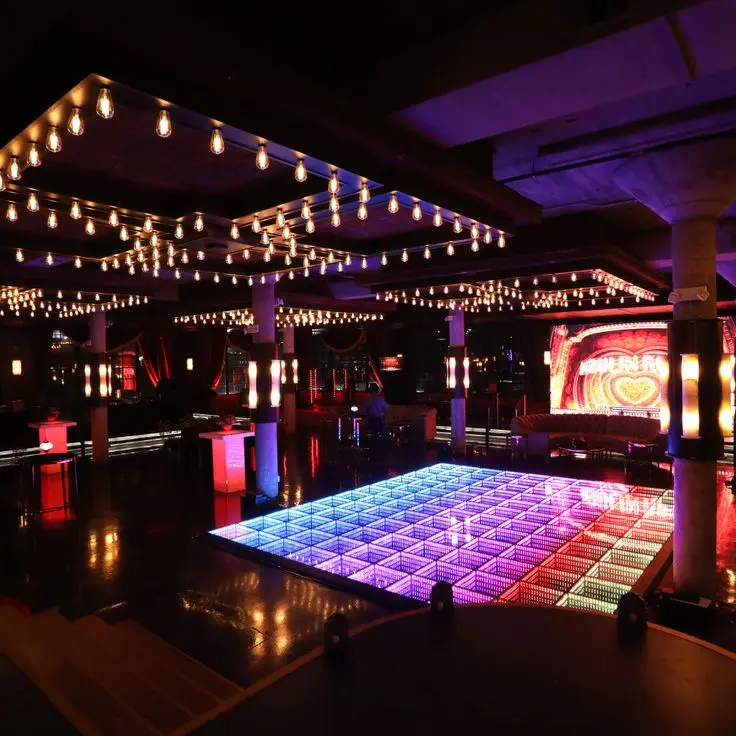
An LED dance floor is a type of dance floor that uses embedded LED lights to create dynamic visual effects and patterns, often responding to music or the movement of dancers. It's a popular feature at events like weddings, parties, nightclubs, and concerts, adding a vibrant and interactive element to the dance experience
Key Features and Components:
Interactive Elements:
Many LED dance floors include sensors (pressure or radar) that detect movement and touch, allowing for interactive games, patterns, and effects that respond to dancers.
Customizable Lighting:
LED panels can display a wide range of colors, patterns, animations, and visual transitions, often synchronized with music or programmed to match the event's theme.
Durable Construction:
High-quality materials like steel frames and tempered glass are used to ensure the dance floor can withstand the demands of frequent use and heavy foot traffic.
Easy Installation:
Some LED dance floors feature magnetic or other quick-connect systems for easy setup and breakdown.
Versatile Applications:
Suitable for various venues and events, including nightclubs, bars, concerts, weddings, corporate events, and more.
Safety Features:
Considerations for safety include non-slip surfaces, edge protection, and moisture resistance.
How it works:
Sensors:
Pressure sensors or radar devices detect movement and send signals to a control system.
Control System:
The control system processes the sensor data and sends instructions to the LED panels, determining which lights to activate and how.
LED Panels:
Individual LED panels (often square or rectangular) are embedded in the floor and display the chosen colors and patterns.
Power and Connections:
Power supplies, controllers, and data cables connect the LED panels and control system.