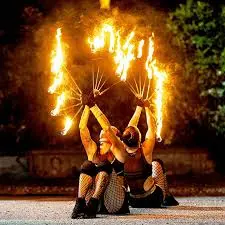
Fire dancers are performers who use fire with dance and acrobatics to create mesmerizing shows, often using props like poi, staffs, and hoops. These performers, also known as flame artists or fire twirlers, are hired for various events like festivals, weddings, and concerts, and their acts can range from solo routines to large troupe performances that may incorporate elements like pyrotechnics. The dances can be choreographed for aesthetic pleasure, self-expression, or pure entertainment.
What fire dancers do
- Use flaming props: They skillfully manipulate objects on fire, such as poi (weights on chains), staffs, and hoops, to create stunning visual displays.
- Perform in various settings: Fire dancing is a common form of entertainment at events like concerts, festivals, weddings, and cabarets.
- Showcase different styles: Performances can include dynamic and athletic routines, elegant and rhythmic styles like fire belly dancing, or more traditional and ceremonial dances.
- Incorporate choreography: Routines are often carefully choreographed and performed to music, and can be pre-planned or more freestyle.
- Utilize a range of skills: Some performers combine dance with other skills like acrobatics and juggling, and may use elaborate costumes and special effects like pyrotechnics.
Types of performers
- Solo or group acts: Fire dancers can perform on their own or as part of a larger troupe.
- Gender-specific styles: There are distinct styles often associated with both female and male fire dancers, though many styles are inclusive.
- Cultural and traditional performances: Some fire dances have deep cultural roots, such as ancient rituals or ceremonial dances, while others are modern and expressive.
Safety and skill
- Intense training: Fire dancing is a skill that requires extensive practice, as performers must master complex movements to showcase their art.
- Safety precautions: Fire dancers and their teams take safety seriously, often working with a safety spotter to manage the audience and monitor for any mishaps, such as accidental fuel transfer.