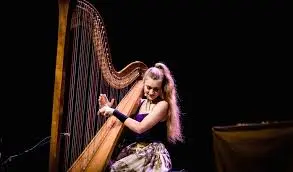
A harp player, or harpist, is a musician who plays the harp, a stringed instrument where the strings run at an angle to the soundboard and are plucked with the fingers. Harpists demonstrate a high degree of technical skill and coordination, as playing the concert harp involves using the thumbs and first three fingers of both hands, while the feet operate up to seven pedals to change the pitch of the strings.
Physical Description and Technique
- Posture: The player typically sits and rests the harp's soundbox on their right shoulder and between their knees. The instrument is usually large and can be heavy.
- Hand Position: Harpists use the thumb, index, middle, and ring fingers of both hands, plucking the strings with the fleshy part of the fingertips and closing the fingers into the palm after plucking. The little fingers are generally not used.
- Fingernails: To produce a clear, resonant sound on a gut-strung harp, players must keep their fingernails very short.
- Coordination: Playing the pedal harp requires complex coordination between both hands (reading music on two staves, like a piano) and both feet (operating pedals to change keys and pitches).
Musical Role and Skills
- Versatility: Harpists play a wide variety of music genres, from classical, baroque, and romantic concertos to folk, jazz, pop, and contemporary film scores.
- Ensemble and Solo Performance: They perform as soloists, in chamber music groups, and as essential members of symphony orchestras.
- Musical Effects: Harpists are renowned for creating specific sound effects, such as flowing glissandos (sweeping the hands across the strings), arpeggios, and adding harmonic richness or a specific color/timbre to an ensemble.
- Adaptability: Professional harpists must plan for key changes and chromatic notes in advance, often marking their scores with specific pedal instructions.
- Related Skills: Beyond performance, many professional harpists also teach lessons, conduct workshops, arrange music, work as session musicians for recordings, and handle the business aspects of a self-employed musician (marketing, administration, maintenance).
Instrument and Maintenance
- Types of Harps: While the large pedal harp is common in orchestras, there are other types like the smaller lever or Celtic harp (which uses hand-moved levers for pitch changes), wire-strung harps (played with fingernails), and electric harps.
- Tuning: Harps have many strings (a concert harp has 47), which means harpists spend a significant amount of time tuning their instruments before performances. The C strings are typically red and the F strings are blue or black to help the player navigate visually.
- Maintenance: Due to the high tension of the strings (almost one tonne of pressure on the neck), harps require regular professional inspection and regulation, sometimes referred to as a "harp doctor" visit.