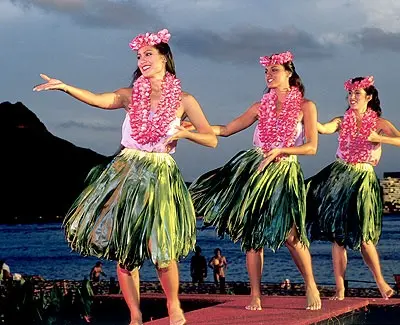
Hawaiian dancers perform the hula, a Polynesian dance that tells stories through rhythmic movements, hand gestures, and facial expressions. There are two main styles: the ancient Hula Kahiko, accompanied by traditional drums and chants, and the modern Hula ʻAuana, which uses instruments like the ukulele and steel guitar and is more familiar to many. Hula is both an art form and a spiritual practice for the Hawaiian people, used to pass down history, legends, and cultural messages.
Performance and cultural significance
- Storytelling: Hula is a form of communication that expresses the history, legends, and emotions of the Hawaiian people. Dancers act out the words of the chants or songs (mele) through their movements.
- Spiritual practice: Hula is considered a spiritual and physical endeavor with deep roots in Hawaiian culture. It is a way to connect with ancestral knowledge and the land.
- Teacher and hierarchy: The term for a hula teacher is kumu hula, which means "source of knowledge". Students are referred to as haumana, and a hierarchy exists with a kumu, alaka‘i (leader), and kōkua (helpers).
- Male dancers: Male hula dancers, called hula kāne, have historically held significant roles as storytellers in traditional settings.
Styles of hula
- Hula Kahiko: The ancient style that predates Western influence. It is performed to chants (oli) and traditional percussion, such as the pahu (drum) and ʻulīʻulī (gourd rattles).
- Hula ʻAuana: The modern style that evolved after Western contact. It is often performed to song and features instruments like the ukulele and steel guitar.