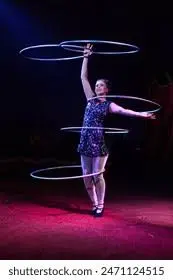
Hula hoop dancers, or "hoopers," use hoops to perform artistic and athletic movements that go far beyond simple waist hooping, combining technical skills with dance and flow arts. This modern practice involves manipulating hoops around various body parts like the waist, arms, and legs, and can also involve off-body tricks and transitions between horizontal and vertical planes. Hoop dancing can be done with or without music and is a form of expression, fitness, and object manipulation.
Key aspects of hula hoop dancing
- Beyond the waist: While waist hooping is a foundation, hoopers move the hoop around many other parts of the body, including the hips, chest, neck, shoulders, and legs.
- On-body and off-body manipulation: Dancers can keep the hoop spinning on their body or manipulate it in the air, transitioning it between planes (horizontal, vertical) and using tricks like the "orbit" or "helicopter".
- Integration with other arts: Hoop dance is considered a form of flow art that draws inspiration from and is often combined with disciplines like rhythmic gymnastics, hip-hop, poi spinning, and fire performance.
- Technical and creative elements: Routines blend technical moves and tricks with freestyle dancing, often performed to music.
- A variety of styles: Hoop dance can range from high-energy, fast-paced routines to more flowing, expressive styles. Some traditions, like the Native American Hoop Dance, use hoops to tell stories and create symbols.