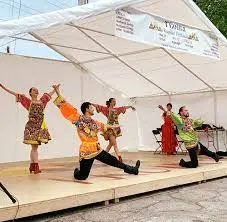
ussian dancers are known for a combination of vigorous, athletic moves like the squatting dance called
prisiadki, and graceful, often "floating" movements, depending on the dance style. Key characteristics include male dancers performing high-energy squats, leaps, and stomps, while female dancers may use more subtle, gliding motions, especially in a specific troupe called
Beryozka. Traditional Russian folk dances, such as the circle dance
khorovod, are often accompanied by fast-paced music with a variety of tempos.
Male dancer characteristics
- Prisiadki (squatting dance): Men frequently perform energetic squatting moves, often involving thrusting one foot out repeatedly while in a squat position.
- Stomping and slapping: Dancers stomp and slap their thighs, chest, and the front of their feet to the rhythm of the music.
- Jumps and acrobatics: Moves like high leaps and split jumps are common, sometimes accompanied by other acrobatic tricks.
Female dancer characteristics
- Floating, gliding movement: Some troupes, like the Beryozka Dance Ensemble, are famous for a difficult, "floating" style of movement where they seem to glide across the stage.
- Graceful and subtle moves: Female dancers may also move gracefully, holding handkerchiefs or performing flowing arm movements.
- Costumes: Traditional folk costumes often feature brightly colored, wide skirts that can swing and swirl, creating a beautiful visual effect.
Other characteristics
- Music: Music can vary from furious and energetic to gentle and subtle, depending on the specific dance and region.
- Group dances: Folk dances often involve group formations, such as the circular khorovod, which has roots in ancient Slavic traditions.
- Improvised and choreographed dances: Some dances, called plyaska, are improvised, while others, like the Troika, are choreographed and often staged for performance.
- Costumes: Costumes can be a vibrant part of the dance, with men often wearing bright shirts and vests, and women wearing large, decorated skirts.