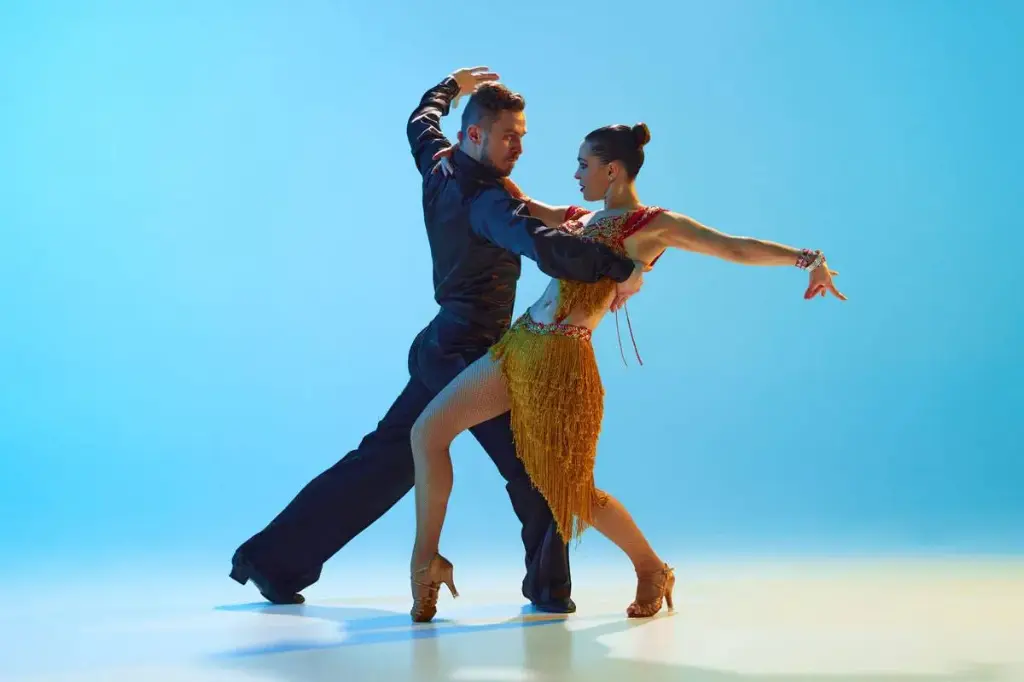
Salsa dancers perform a lively, energetic, and sensual partner dance to salsa music, known for its complex rhythms and cultural roots. The dance involves rhythmic footwork, hip movement, and expressive upper body and arm movements. Dancers' upper bodies typically stay level, with their weight shifting and bodies rotating in a figure-eight pattern while stepping and turning. Salsa dancing can be done in many styles, including Cuban, Miami, and New York styles, and is popular globally.
Core characteristics
- Rhythm and music: Danced to salsa music, with a 4/4 time signature. The rhythm is infectious and sensual, and can be learned relatively quickly, though mastering it is challenging.
- Partner connection: Typically performed with a partner, though solo variations and group forms exist. The connection between partners is key to the dance.
Movement and footwork:
- Dancers keep their upper bodies level and use small steps with minimal elevation, focusing on shifting weight and gentle foot placement.
- Hip movement is a core element, with the body rotating in a figure-eight pattern.
- The dance includes a mix of solo footwork, partner work, and turns, with different regional styles varying on the timing of the basic step (e.g., "on 1" or "on 2").
Energy and style:
- The dance is energetic, relaxed, and can be very sensual.
- A good lead is clear and expressive, using hand movements to guide the partner without tension.
- Variations: Numerous regional styles exist, such as Cuban style, Miami style, and Colombian Cali style, due to salsa's adaptation across various cultures.