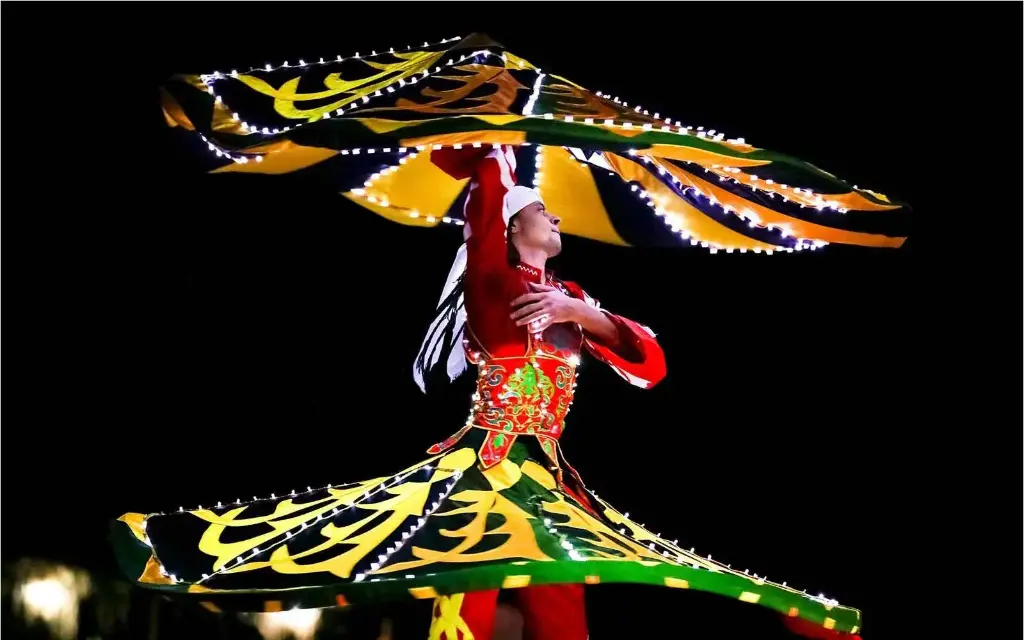
Tanoura dancers perform a traditional Egyptian folk dance where male performers spin continuously in colorful, multi-layered skirts to create a mesmerizing visual spectacle. This whirling dance is rooted in Sufi traditions and symbolizes spiritual transcendence, the rotation of the Earth, and a connection to the divine. The name "tanoura" itself means "skirt" in Arabic, referring to the iconic costume.
Dance and symbolism
- Spiritual meaning: The dance is a form of meditation intended to lead the dancer to a trance-like state and spiritual connection.
- Symbolism: The continuous spinning represents the cyclical nature of life and the movement of the universe, with the dancer symbolizing a planet orbiting a sun. The dance also symbolizes the pilgrimage around the Kaaba in Mecca if performed in a spiritual context.
- Costume: Dancers wear skirts that can weigh up to 18 kilograms and are made of multiple layers of fabric. The movement of the skirts is a central focus of the performance. The geometric appliqués on the skirts often represent different Sufi orders.
Performance and origin
- Origin: The dance originated in Turkey with the Sufi brotherhood in the 12th century and was brought to Egypt, where it is now a national dance.
- Music: The dance is performed to the rhythm of traditional Arabic music, which can sometimes include chanting religious verses.
- Dancers: Only men perform the traditional Tanoura dance.
Where to see it
- Cultural events: Tanoura performances are a staple at many cultural events, particularly in places like Dubai, often featured as part of desert safaris and cultural evenings.