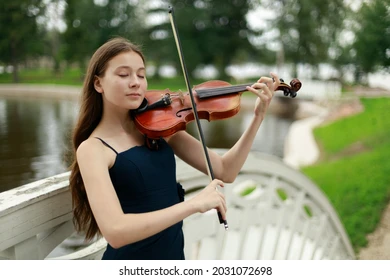
A violin player, or violinist, is a musician who plays the violin, using a bow drawn across strings or by plucking them (pizzicato). The process involves precise finger placement for intonation, coordinated bow movements for dynamics and tone, and the ability to express emotion through various techniques like vibrato and bowing styles. Key skills and qualities include discipline, emotional sensitivity, and sharp listening abilities, which develop through consistent practice and training.
Physical and technical aspects
Musical and expressive elements
- Intonation: A violinist must place fingers in the exact right spots to ensure notes are in tune.
- Vibrato: A technique where the player slightly sharpens and then flattens the pitch of a note, creating a "wobble" to add emotional expression.
- Dynamics: A wide range of volume is controlled by the speed and pressure applied with the bow.
- Tone and timbre: Choosing different strings or playing positions can alter the quality of the sound (timbre).
- Expression: Violinists must be able to convey emotion through the music, a skill that requires emotional sensitivity and a deep connection to the piece.
Necessary skills and qualities
- Discipline and perseverance: Consistent, long-term practice is essential for mastering the technical demands of the instrument.
- Coordination: Violin playing requires incredible control and coordination between the fingers of the left hand and the bow arm.
- Listening ability: A good violinist needs critical listening skills to compare their actual sound with the sound they want to produce.
- Emotional sensitivity: The ability to "feel" what the composer is expressing is crucial for effectively transmitting the music's emotion to an audience.
- Rhythm: An innate sense of pacing and tempo is vital for correctly performing a piece.