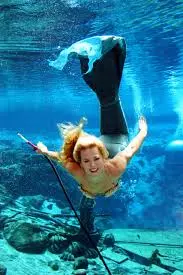
A mermaid is a mythical aquatic creature with the head and upper body of a female human and the tail of a fish. Descriptions vary widely across global folklore, portraying them as both alluring and dangerous, and occasionally as benevolent beings with magical powers.
Physical Appearance
- Form: The primary characteristic is the hybrid body shape: human from the waist up and fish from the waist down.
- Head and Torso: Typically described as beautiful women with human features, though some older or darker tales describe them as monstrous or unattractive.
- Hair and Scales: Hair color varies (e.g., green, black, red, gold), often flowing and wet. Their fish tails are covered in shimmering, often iridescent scales in various colors like green, blue, silver, orange, or gold.
- Accessories: Mermaids are often depicted holding a comb and mirror (symbols of vanity) or adorned with pearls, shells, and other ocean-themed jewelry.
Abilities and Characteristics
- Aquatic Life: Mermaids are natural swimmers, capable of moving quickly and gracefully in the water, and can breathe underwater. They are long-lived, potentially for centuries, though typically mortal.
- Voice and Song: Many legends endow them with enchanting, beautiful voices. They often use this ability to sing mesmerizing songs that lure sailors to their doom, similar to the Greek Sirens with whom they became conflated in medieval times.
- Magic and Shapeshifting: In some folklore, they possess magical powers, such as the ability to control weather, heal diseases, or grant wishes. Some stories, such as the Scottish Selkies or Irish Merrows, feature mermaids who can shed their fish tail (or a special "skin"/cap/belt) to assume human form on land.
- Dual Nature: Mermaids embody the dual nature of the sea itself—sometimes kind and helpful, other times representing the ocean's destructive, untamed power, bringing misfortune and shipwrecks.
Cultural Variations
- Hans Christian Andersen's The Little Mermaid: This famous literary fairy tale portrays a young mermaid who yearns for an immortal soul (which mermaids in this story lack) and the love of a human prince, eventually sacrificing her life for him and turning into sea foam.
- Mami Wata (Africa): A powerful water spirit, often mermaid-like, worshipped for her ability to bestow wealth, beauty, and healing, but capable of bringing misfortune if disrespected.
- Rusalki (Eastern Europe): Slavic water nymphs, often depicted as the vengeful ghosts of young women who drowned, who would lure men to a watery death.
In modern interpretations, influenced largely by media like Disney's The Little Mermaid, they are often portrayed as friendly, curious, and playful characters.