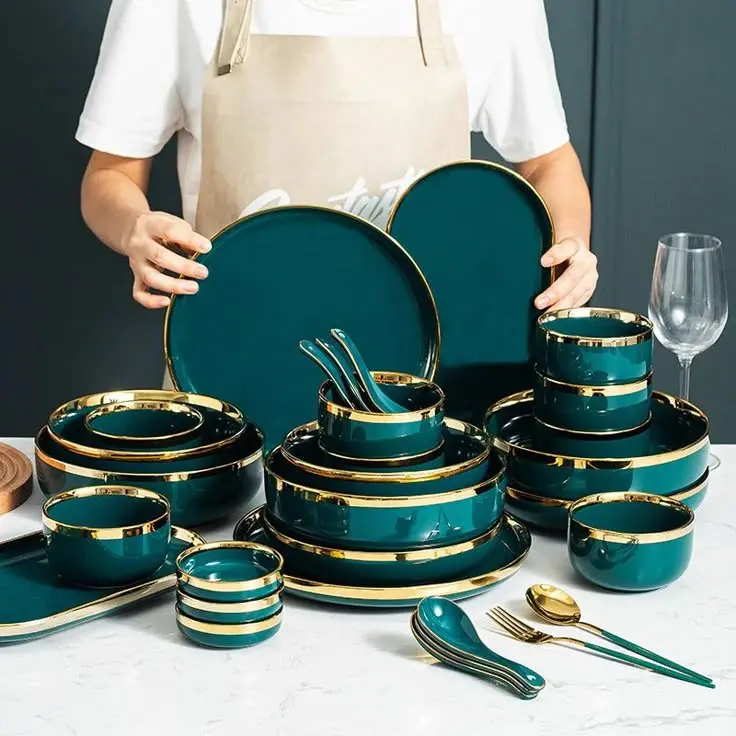
Crockery refers to a collective group of tableware, primarily ceramic dishes like plates, bowls, cups, and saucers, used for serving and eating food, blending functionality with decor. Made from materials like porcelain,
stoneware,
earthenware, or
melamine, it ranges from rustic
terracotta to fine
bone china, serving both daily meals and formal occasions, with items like
soup bowls,
egg cups,
platters, and
sauce boats completing the sets.
Key Characteristics
- Materials: Ceramic (earthenware, porcelain, stoneware, bone china), glass, plastic (melamine), wood, and terracotta.
- Functionality: Designed for practical use (serving, eating) and aesthetic appeal (decorating the dining space).
- Variety: Available in numerous shapes (round, square, irregular) and styles (rustic, modern, traditional).
Common Crockery Items
- Plates: Dinner plates, side plates (bread/butter), dessert plates, soup plates, fish plates, and charger plates.
- Bowls: Soup bowls, cereal bowls, dessert bowls, and bowls for Asian dishes.
- Cups & Mugs: Tea cups, coffee cups (including demitasse), and mugs for hot beverages.
- Serving Ware: Platters (oval, rectangular), sauce boats, tureens, condiment trays, and cruet sets.
- Specialty Items: Egg cups, sugar sachet holders, and underliners.
Types & Materials in Detail
- Earthenware/Terracotta: Coarse clay, rustic look, good heat retention, but fragile and often unglazed (e.g., for curries, stews).
- Porcelain/China: Finer, often translucent, durable, and widely used for elegant dinnerware.
- Stoneware: Strong, dense, versatile, suitable for oven-to-table use.
- Melamine: Lightweight, durable plastic, common for casual or outdoor dining.
Usage & Sets
- Crockery is bought in sets (dinner sets) containing coordinated pieces for a complete table setting.
- It sets the mood for any dining experience, from casual family meals to formal gatherings.